
7 Food Industry Trends and Statistics for 2025
The food industry in 2025 is being shaped by rapid technological innovation, evolving consumer preferences, economic fluctuations, and growing environmental awareness. With shifting demands and expectations, manufacturers, retailers, and food service operators are rethinking everything from ingredient sourcing to the way food is preserved.
Here, we explore 7 of the most influential food industry trends and statistics for 2025, backed by recent data and insights to help stakeholders prepare for the future.

1. Specialty foods have grown to a quarter of market share
Consumers are gravitating toward premium, high-quality foods that offer unique flavors and artisanal appeal. This includes everything from small-batch cheeses to exotic items like Dubai chocolate.
According to the MarketWatch, sales of specialty foods are projected to reach $231 billion in 2025, representing 25.2% of total grocery sales, up from 17.6% just a decade ago.
2. Consumers are experimenting with global flavors and fusion cuisine
Driven by travel, media, and increased cultural exchange, consumers are expanding their palates to include global flavors and hybrid dishes, like potato chips with Indian spices and sushi burritos.
Borderless cuisine is a key market trend, with creative mashups and bold international ingredients like gochujang, harissa, and yuzu now staples in Western kitchens.
3. Sustainability and ethical sourcing drive consumer loyalty
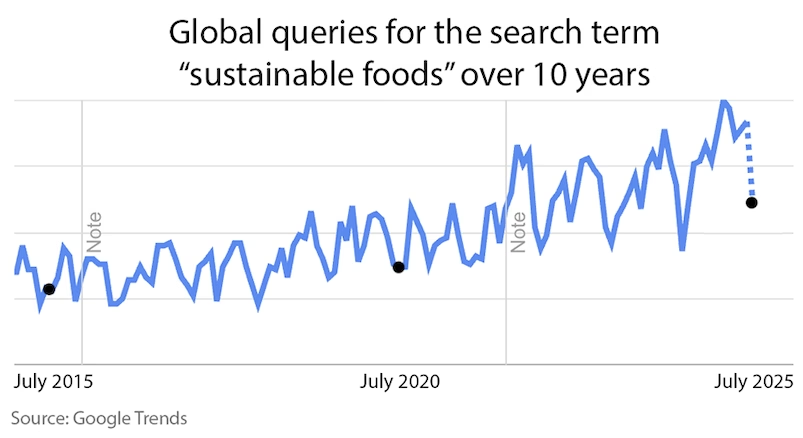
Searches for sustainable foods have steadily increased over the past decade. Sustainability is now a core driver of consumer decisions.
Recent research highlights just how much sustainability matters:
- 92% of consumers trust brands that prioritize environmental or social responsibility.
- 55% of consumers say they’re willing to pay more for eco-friendly products.
- 88% of consumers are more loyal to companies that support social and environmental causes.
Brands that demonstrate a genuine commitment to ethical sourcing, environmental stewardship, and transparent practices are far more likely to win—and keep—customer loyalty.
4. Inflation and tariffs are shaping purchasing decisions
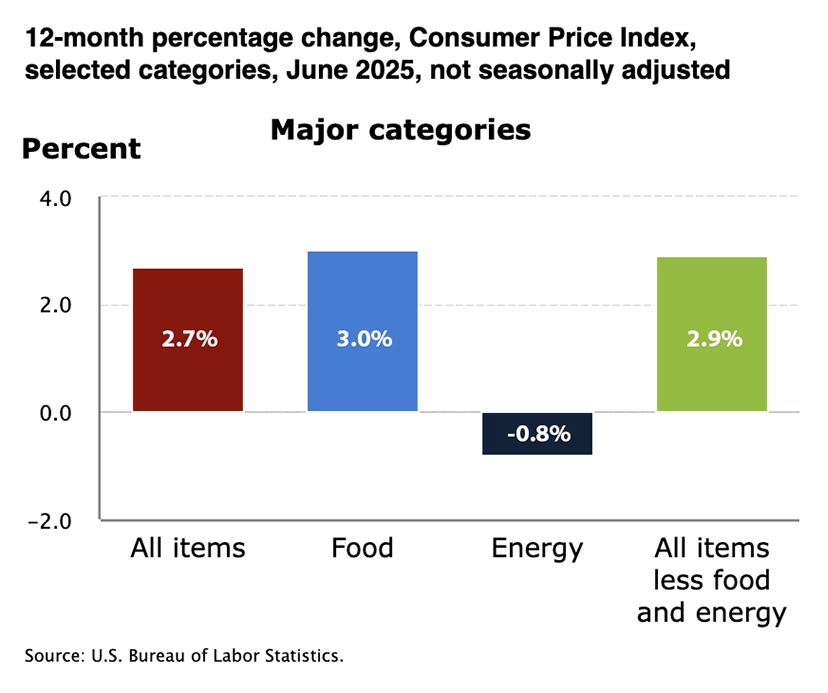
With food prices up 2.9% in 2025 and beef leading at 6.8%, value-conscious consumers are trading down to private labels and frozen meals.
In June 2025 prices for consumer goods had risen 2.7% over the past 12 months, with food showing the greatest increase.
This represents a 2.4% increase in food at home. Here’s a closer look at price increases at the grocery store:
- Cereals and bakery products: 0.9% increase
- Meats, poultry, fish, and eggs: 5.6% increase
- Dairy and related products: 0.9% increase
- Fruits and vegetables: 0.7% increase
- Alcoholic beverages and beverage materials: 4.4% increase
Food away from home rose by 3.8%, including food from restaurants and other eating establishments.
In response, consumers are increasingly more price-conscious. For example, data from Statista shows how consumers plan to react to price increases related to tariffs in 2025:
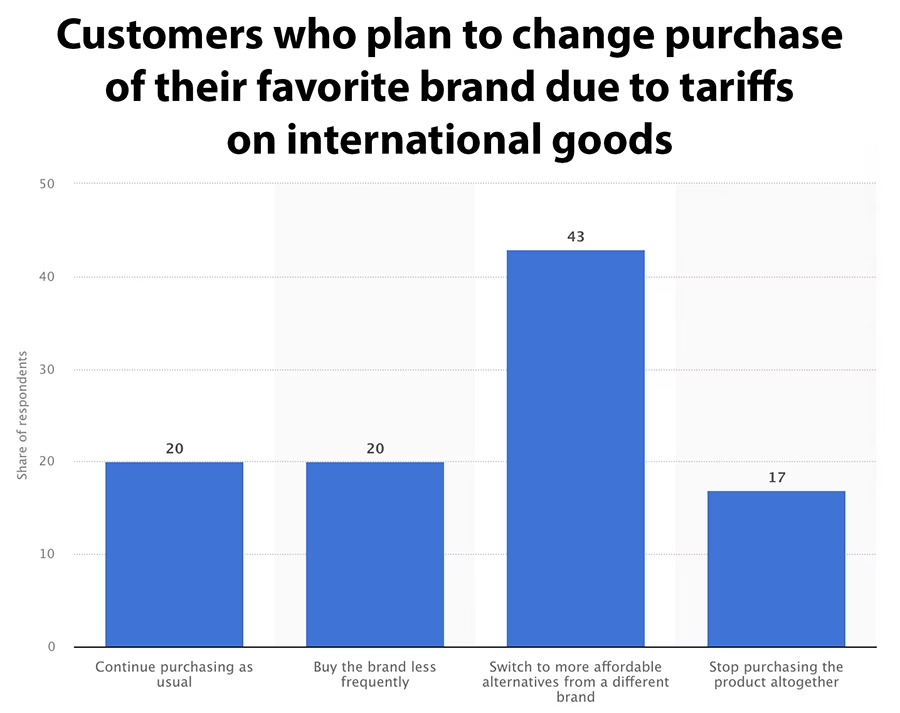
Here’s how consumers say they’re adjusting their buying habits:
- 20% plan to keep purchasing their favorite brand as usual
- 20% plan to buy the brand less frequently
- 43% plan to switch to more affordable alternatives
- 17% plan to stop purchasing the product altogether
As customers are increasingly inclined toward alternative brands, private labels, frozen goods, and value meals, brands are responding with budget-friendly packaging and promotions to retain market share.
5. Consumers want clean, functional foods
Food industry trends show consumers are increasingly health-conscious, avoiding heavily processed foods in favor of items containing simple, recognizable ingredients.
A March 2025 report revealed these global changes in consumer behavior over the past year:
- Nearly 50% of consumers bought more fresh, unprocessed foods'
- 30% reduced intake of processed foods
- 27% avoid products or ingredients they perceive as harmful, such as artificial sweeteners, additives, and preservatives
- Over 33% of consumers will opt for new ingredients for more natural foods, like plant-based products
Baby and toddler foods lead in clean label claims, with 73% global penetration. Plant-based meat substitutes, hot drinks, ice cream, and desserts are other prominent categories for clean label claims.
Plant-based foods have grown to an $8.1 billion market in the U.S. to accommodate increasingly plant-based diets.
Meanwhile, wellness-driven eating is becoming mainstream, with food seen as a form of therapy. Consumers are prioritizing food that supports physical and mental well-being, such as mood-boosting snacks and hormone-balancing ingredients. Expect a surge in demand for functional foods that regulate blood sugar, aid digestion, and improve sleep.
6. Health pressures—from GLP-1 medications to MAHA regulations—are reshaping diets
The rising use of GLP-1 weight-loss drugs like Ozempic is shifting dietary behaviors and product preferences industry-wide, while governments are targeting ultra-processed foods (UPFs) due to links with obesity, diabetes, depression, and certain cancers.
About 80% of GLP-1 users research food products and health benefits to help support their weight loss.
Among shoppers using these drugs:
- 95% report positive dietary changes
- 55% eat smaller portions (66% Gen X)
- 53% drink more water
- 49% eat healthier, snack less
- 55% buy more fresh produce
- 75% prioritize vitamin-fortified foods
- 74% want high-protein options
- 73% look for gut health support
The global GLP-1 market is projected to grow at a compound annual growth rate (CAGR) of 29.6% through 2030, indicating long-term impact on food industry trends. Further, 76% of people who discontinue GLP-1s maintain or reduce food intake.
Consumers want smaller portion sizes, higher-protein meals, and nutrition-dense snacks. For example, Nestlé has responded by launching GLP-1-friendly frozen meals.
Meanwhile, the "Make America Healthy Again" (MAHA) initiative proposes eliminating synthetic dyes and closing the Generally Recognized as Safe (GRAS) loophole for food additives.
UPFs currently account for 73% of the U.S. food supply. Regulators aim to reduce this significantly, claiming that today UPFs are the source of nearly 70% of children’s calories.
7. Technological advancements are driving efficiency and reducing waste
New technologies are being developed to combat food waste by extending shelf life and improving spoilage detection. This is a priority because approximately 32% of food is lost or wasted annually—13.2% between harvest and retail, and 19% wasted in retail, food service, and homes. One of ABM Equipment's customers, Mill, has a unique solution to household waste, and Artificial Intelligence (AI) and the Internet of Things (IoT) are reducing food waste across the supply chain with:
- Smart demand forecasting: AI helps retailers prevent overstock and spoilage.
- Automated sorting: AI-powered machines detect ripeness, spoilage, and disease early.
- Food recovery: AI matches surplus food with food banks in real time.
- Intelligent storage: AI adjusts warehouse conditions to extend shelf life.
- Supply chain tracking: IoT monitors transport conditions to prevent spoilage.
- Smart fridges: Sensors track expiration dates and suggest recipes.
- Dynamic pricing: IoT enables discounts on near-expiry items to reduce waste.
Plus, innovations like smart packaging, advanced refrigeration, and spoilage sensors that alert consumers and retailers in real time are further reducing food waste.
For food manufacturers looking to improve traceability, food safety, and production efficiency, process control systems with IoT integration and real-time analytics are reducing waste.
What These Food Industry Trends Reveal
To stay competitive in today’s food and beverage industry, companies must rapidly adapt to market trends and evolving demands across the entire supply chain.
- Food manufacturers can meet growing demand by offering premium products that reflect evolving consumer trends.
- Cultural mashups and fusion cuisine signal key market trends food companies can’t ignore.
- Brands focused on sustainable practices, ethical sourcing, and biodegradable packaging are better positioned amid climate change and shifting values.
- Inflation and tariffs are changing how consumers shop, pushing food manufacturers toward value-driven strategies.
- Food and beverage trends show strong interest in simple, health-forward ingredients—especially in wellness and plant-based categories.
- From GLP-1 medications to new food safety regulations, emerging trends are transforming formulation and portion control strategies.
- Data-driven automation improves quality control, reduces shortages, and boosts traceability—critical for food safety and resilience.
Food companies must innovate quickly, using automation, transparency, and sustainable practices to thrive in a volatile, health-driven market.
How ABM Equipment Can Help
ABM Equipment specializes in complete handling, processing, and packaging systems for dry bulk solids applications as well as non-destructive product inspection for all food and beverage products. With 40+ years of experience, we help manufacturers adapt to rising health, sustainability, and cost pressures.
Whether you're scaling production, reducing waste, or meeting regulatory standards, we deliver future-ready solutions—backed by engineering expertise, custom fabrication, and full-service support.
For more information or to get the ball rolling on your next project, just fill out the form below.