
Food X-Ray Machines
By Application
ABM Equipment is known for making X-ray work for difficult applications with custom infeed/outfeed configurations, specialized rework stations, and fine-tuned algorithms. We've put screens on swing-arms, built conveyor systems for double-checking rejects, found voids in bread, and found deformed product. And now with photon-counting models from Eagle, we can find more contaminants and do more quality checks than ever.
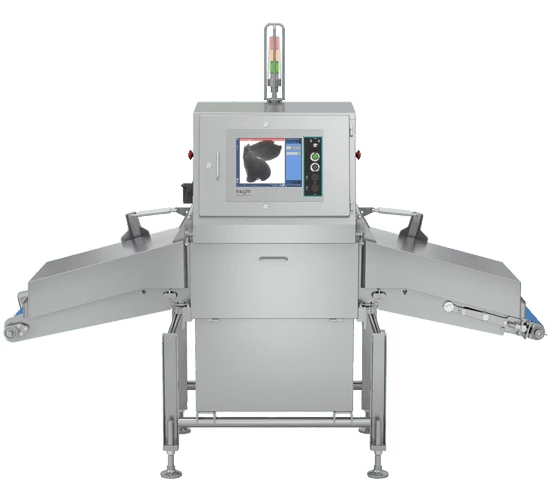
Loose Meat X-Ray
The X-ray systems for inspecting raw, unpackaged meat use angled “arms” to shield users from X-rays without touching the meat. It is most popular for pre-processed fish and chicken because it does not measure fat content but is compatible with PXT for finding small bones that were not discoverable a few years ago. The unmatched performance and comprehensive hygienic features make the RMI models (400 & 540) from Eagle the industry’s best solution for loose meat.
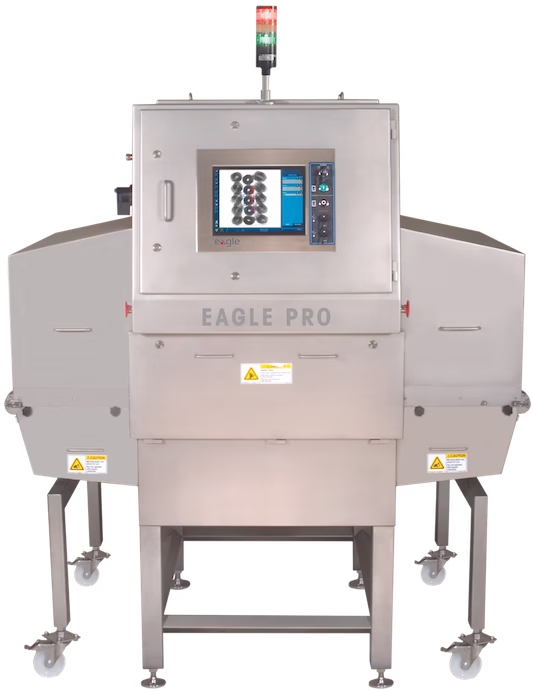
Case & Multi-Lane X-Ray
The model for X-raying cases of product delivers superior contaminant detection and other quality checks for large packages. It can detect product voids, missing products, package damage, case weight, item weight, and fill level of the cases or individual products within it. Though larger, it can detect small contaminants just as effectively as smaller units, which is why they are often repurposed to accept multiple lines of smaller products so processors can buy 1 bigger machine instead of multiple smaller ones. The corresponding model is the 720 from Eagle.
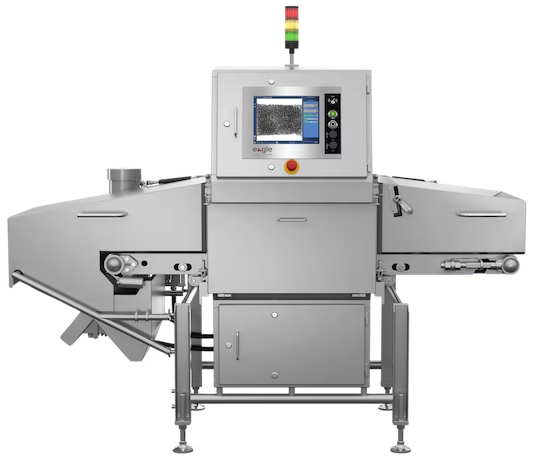
Bulk Food X-Ray
The bulk food x-ray machine features a number of infeed options to accommodate different foods and process configurations. It delivers a robust construction that Eagle is famous for, with full sanitary wash-down available. It is available in both the legacy and PXT models for either lowest total-cost-of ownership (if you’re trying to just check the X-ray box) or if you want to find everything the modern industry is capable of. The corresponding model is the bulk 540.
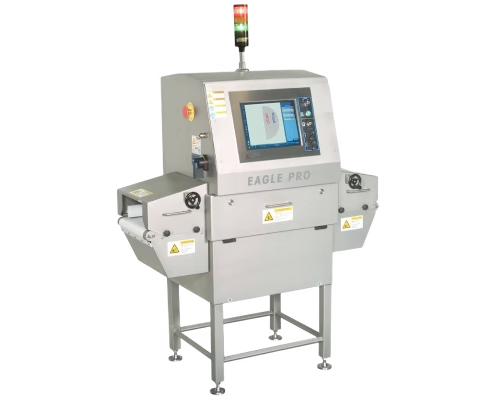
Food Bar X-Ray
Our smallest x-ray machine is used for the smallest individually-packaged product such as candies, hydration packs, and small nutraceuticals, but most commonly for food bars such as candy, breakfast, and protein bars. The model used for this is the Pack 240 Pro from Eagle.
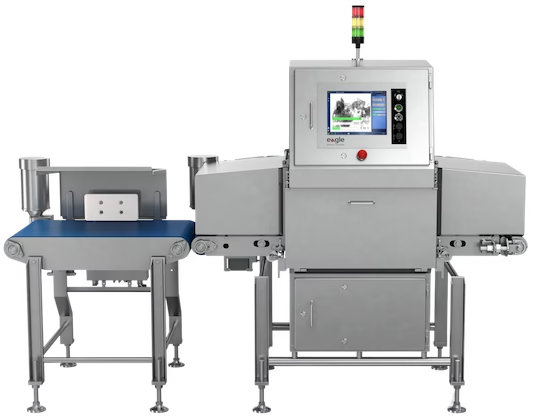
Beef Carton X-Ray
Built specifically for beef in cartons, crates, and vacuum-packed, frozen blocks, this inline system analyses fat content, detects foreign matter, and monitors weight. It is not yet fully available in photon-counting models but will be soon. Still, it is known for the longevity of its generator, which is the most expensive component of an X-ray machine. Like other units, it can detect metal and non-metal contaminants, determine item weight, and reject deformed items if applicable. The corresponding model from Eagle is the FA3/C, and is also used for pork.
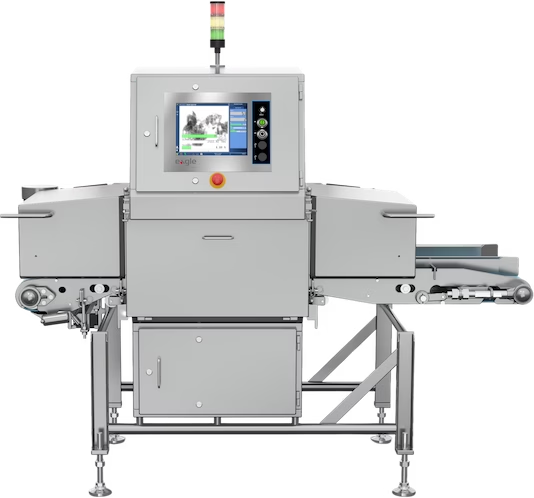
Bulk Beef X-Ray
Built specifically for bulk beef, this multi-application system provides inline fat measurement for fresh, chilled, frozen, and hot-boned bulk beef, frozen or tempered (“naked”) meat blocks and unwrapped meat conveyed in plastic crates. Though it is not yet fully available in photon-counting models, it is currently in development. Still, it is known for the longevity of its generator, which is the most expensive component of an X-ray machine. Like other units, it can detect metal and non-metal contaminants, determine item weight, and reject deformed items if applicable. The corresponding model from Eagle is the FA3/M. M stands for “mixed”, meaning it can be used for cartons as well, while the C can only be used for cartons.
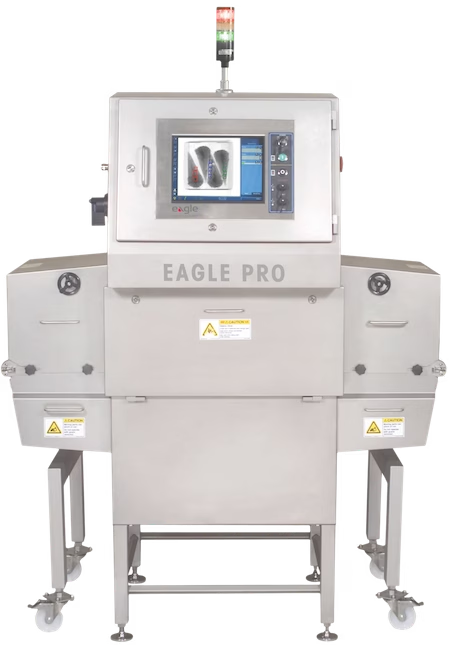
Small Package X-Ray
The X-ray machine best suited for small packages is the 320 from Eagle, able to inspect packages up to 11.5″ wide at 2″ high and 6.7″ wide at 8.5″ high. It detects foreign matter, package damage, and missing items in food, nutraceutical, pharmaceutical, and general CPG industries. Currently not available in photon-counting models, if your package is close to the above dimensions, see the “package X-ray” machine if maximum resolution is required.
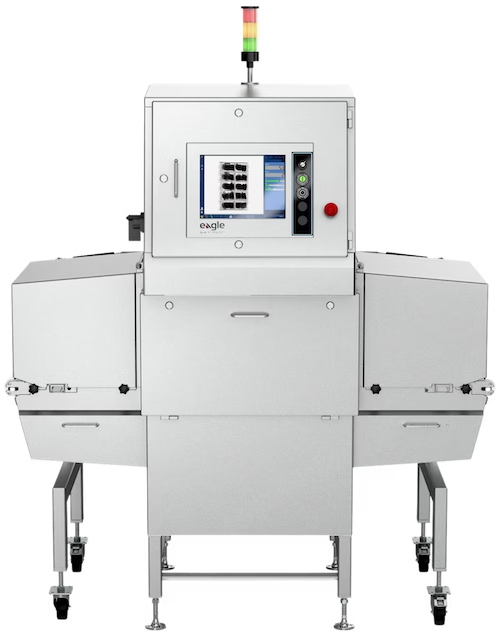
Small Case X-Ray
The small case X-ray models allow contaminant detection and product weight for up to large packages and smaller cases of products. It can also detect damaged and deformed casing as well as product count within each case. With the corresponding model being the 550 from Eagle, it is intended for sealed product and is not typically washdown, but full washdown configuration is available.
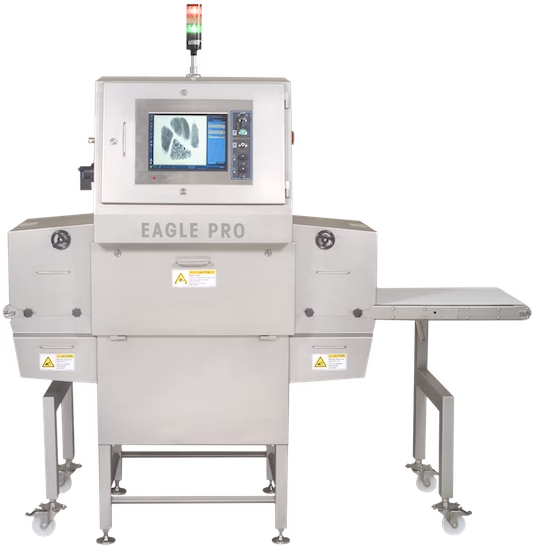
Package X-Ray
The standard Package X-ray model provides enhanced graphical interfaces and improved contaminant detection for packages up to 15″ wide at 2″ high, or 8.9″ wide at 8.5″ high. In addition to foreign materials detection, the corresponding 430 from Eagle is able to detect package ruptures, package weight, item count, and fill level when applicable. Available in both legacy and PXT models, users can choose between highest performance in the industry or lowest total cost of ownership depending on the application.
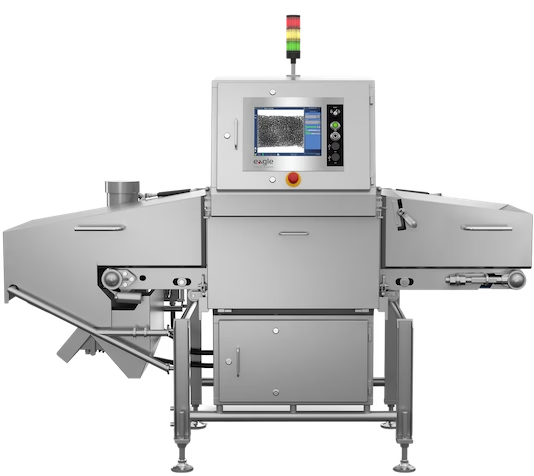
Potato X-Ray
The most popular—and optimally sized—X-ray models for potato applications are the bulk 415 and 540 models. These models are PXT-compatible, which is favored by larger producers for their precision in extremely messy images. French fries, for example, can cross each other or run perpendicular to detectors, making detection of small contaminants difficult for older X-ray models. Using photon-counting technology has allowed us to reduce false rejects and create rework procedures that are both simpler and more effective for our customers.
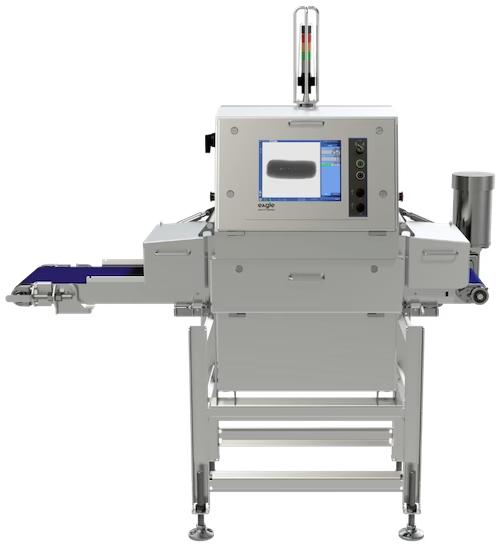
Packaged Meat X-Ray
The best X-ray machine for packaged meat is an adaptation of the 240 model which allows toolless belt removal and full washdown. It is most commonly used for meat packs, meat chubs, and smaller packages of diary, where daily sanitization of equipment is mandatory. It was originally developed for meat-chub producers because of its clip-count and checkweighing features.
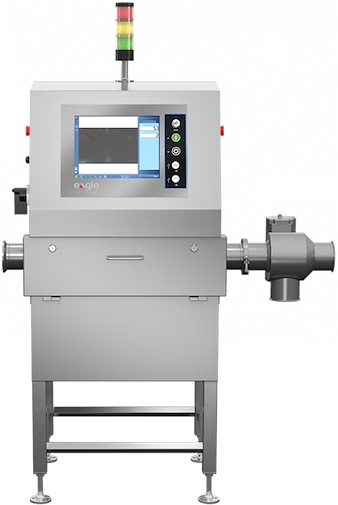
Liquid X-Ray
The liquid X-ray model (pipeline from Eagle) is used for all types of liquid products from soups and slurries to ground meat. It employs a flow meter to improve the image consistency—which makes contaminants easier to find—and a diverter valve to reject contaminated segments of product.
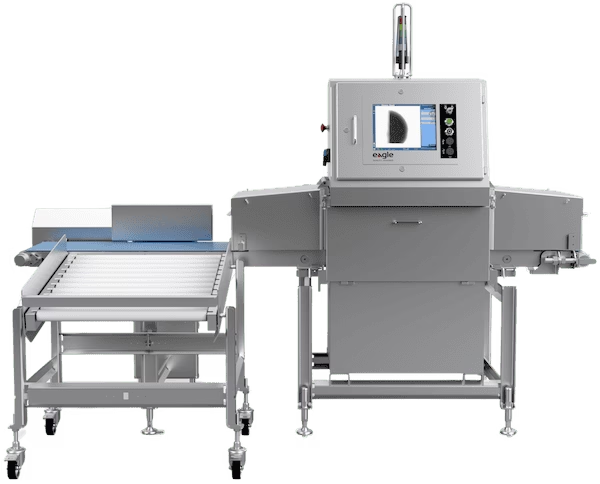
Cheese X-Ray
The 3-A hygienic version of the mid-sized X-ray machine for standard packages is the most popular unit for cheese applications. With a 400mm (15.7”) belt width it is a popular option for producers of wrapped and unwrapped cheese. Many features, which are expanded on below, make cleaning easy and improve hygiene.
Get a Quote
Need Equipment?
Tell us about your product, where it's coming from and where it's going, and what you're trying to accomplish; we'll get you a quote in no time.
Need A System?
Tell us about your product, how you're currently making it, and any unique challenges of your application. We'll have a few more questions but will get you a quote all the same!
"*" indicates required fields