Learn why you want to use the correct material for each disc type and orientation, clean your grain, use the correct settings, not overheat your mill, and remember to clean it.
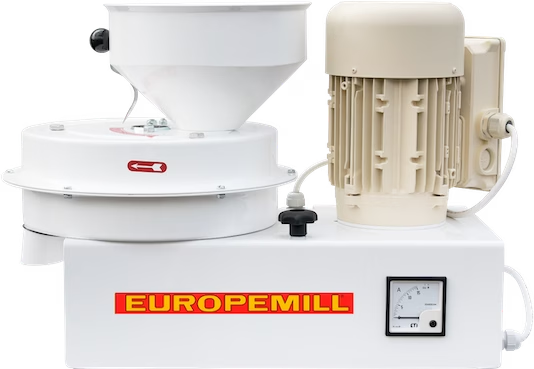

News, instructions, and articles addressing commonly-asked questions.
Learn why you want to use the correct material for each disc type and orientation, clean your grain, use the correct settings, not overheat your mill, and remember to clean it.
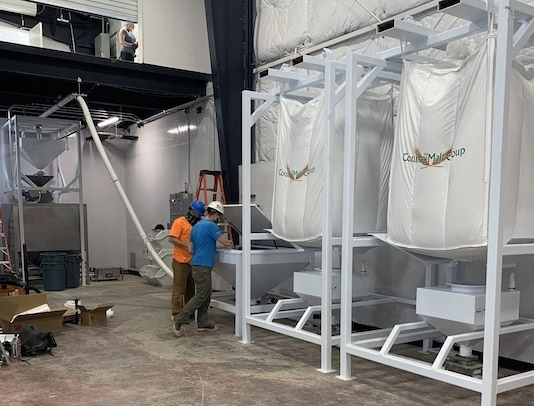
Bulk bag unloading systems can save a lot of money in labor and the cost of your ingredients. But with automation comes safety procedures. If you want to avoid accidents, training your employees with the following tips could help.

This guide will provide an overview of bulk weighing and batching systems, including the types of products handled, the equipment used, and the criteria for selecting equipment & integrators. Covering all the regulations applicable to each area and product is much too involved for any one document, but a good system designer or integrator should be knowledgeable enough in your product to bridge the gap.
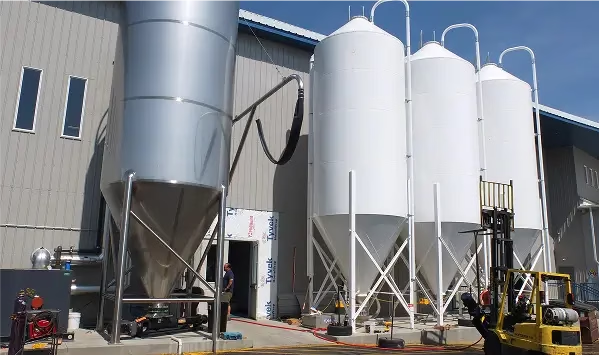
This calculator tells you how much you’ll save on grain by ordering in bulk. Use the quote form below it to find out the cost of storage to hold it, and you’ll be able to tell if a new grain system will pay for itself.
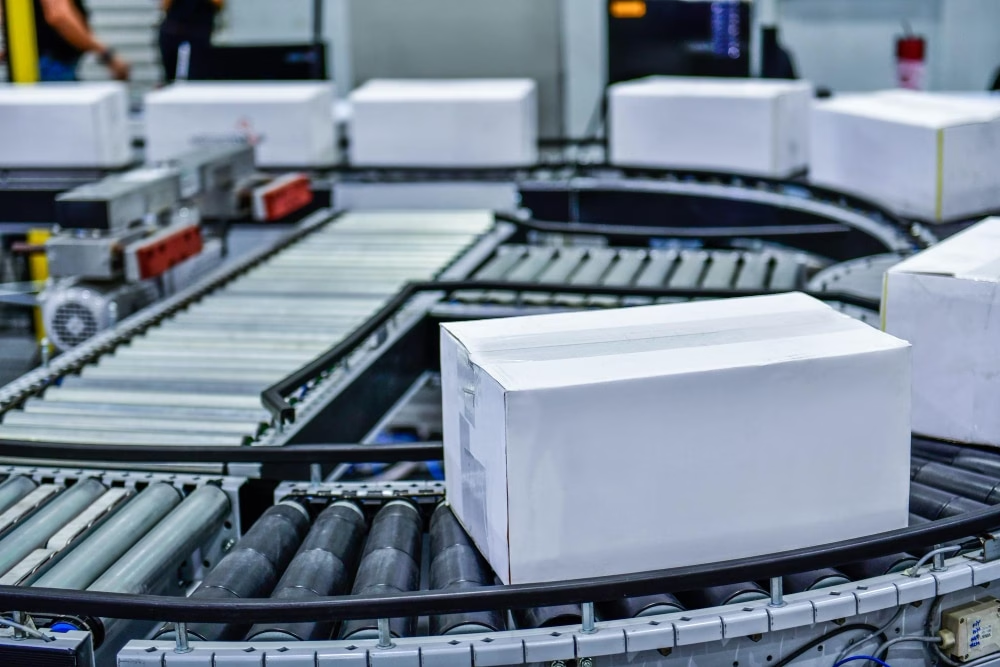
As your production scales, moving from semi-automatic to fully-automatic packaging systems is a transformative step that boosts efficiency, consistency, and capacity. This process involves several key phases: selecting equipment, designing the system, installation, and maintenance.
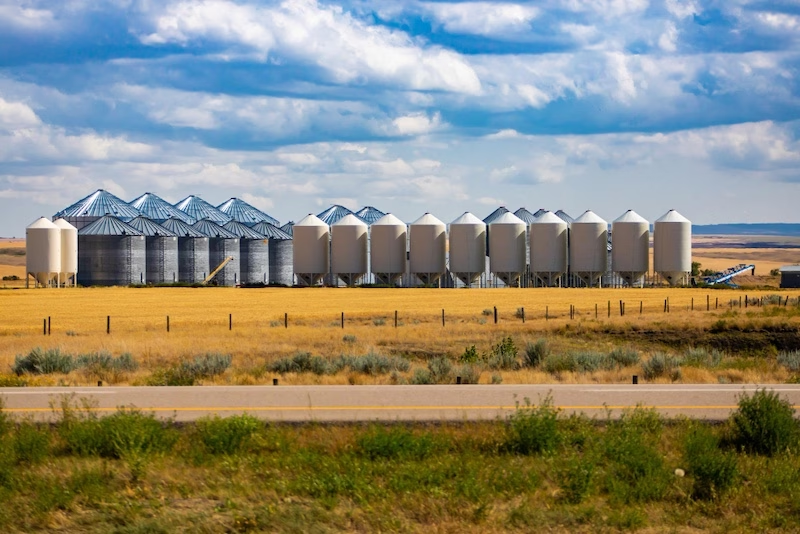
Agricultural silos are structures designed for the storage of bulk materials—usually grain—while keeping them (relatively) dry and cool. Silos aid growers by allowing them to save their product for times when it will fetch a higher price than at harvest time, and they allow purchasers to save money because when they can store more they can buy in bulk.

The first disc mill was invented by Kingsland in 1856. The mill consisted of a rotating disk positioned between two stationary discs. The grinding was adjusted by axial movement of the fixed discs. A more advanced grinding apparatus is the Bertram disc mill. This mill is essentially similar to the previous one, but the movement of the fixed discs was accomplished by four screws driven through a worm gear.

Testing and Initial Setup Instructions For The Dewatering Centrifuge TLDR/Overview 60% liquid to 40% solids ratio is usually optimalMinimum flow is 10 gal./min.Max pressure is 70 psi, max temp is 176°FScreen should be set in water if not run for more than ~12...

Metal Detectors vs. X-Ray For Food Inspection Choosing between X-ray inspection systems and metal detectors depends on several factors, including the types of contaminants you need to detect, the range of materials you're inspecting, and specific...

Circular Vs. Rectangular Vibratory Screeners For most food and pharma applications, circular vibratory screeners are generally preferable to rectangular. They're gentler, more efficient, continuous, and able to be hygienic. Most of the time, we...
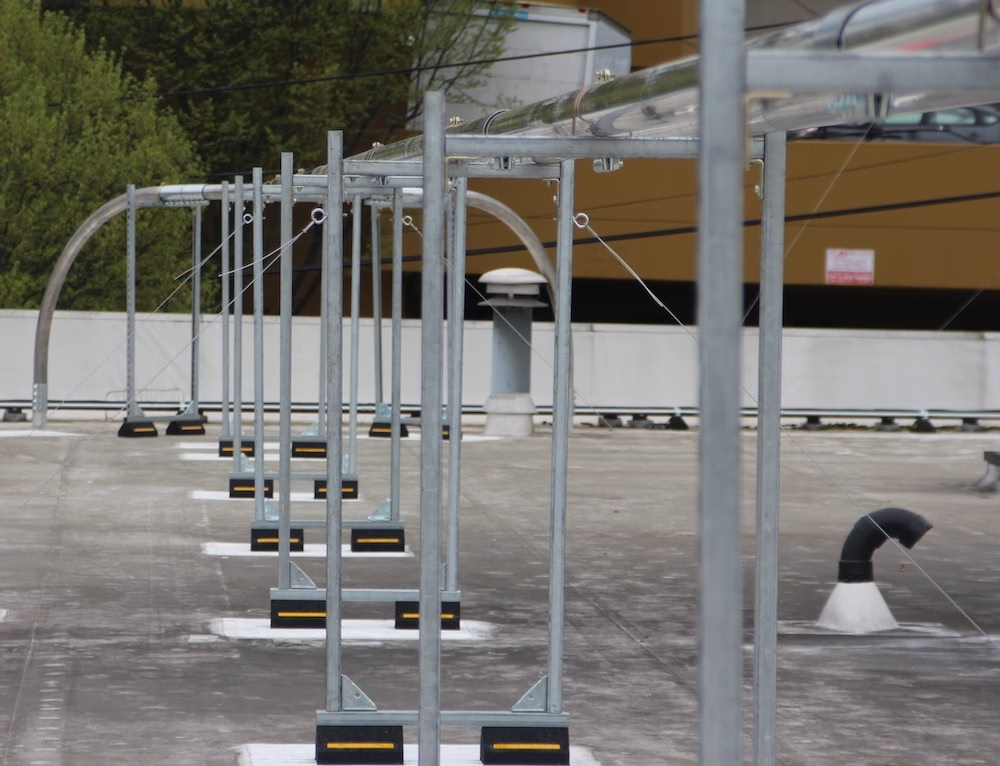
Dense Phase vs Dilute Phase Pneumatic Systems Pneumatic conveying systems use combination through a pipeline to transport bulk materials such as powders, granules, and pellets. Depending on the application, two types of pneumatic conveying systems...
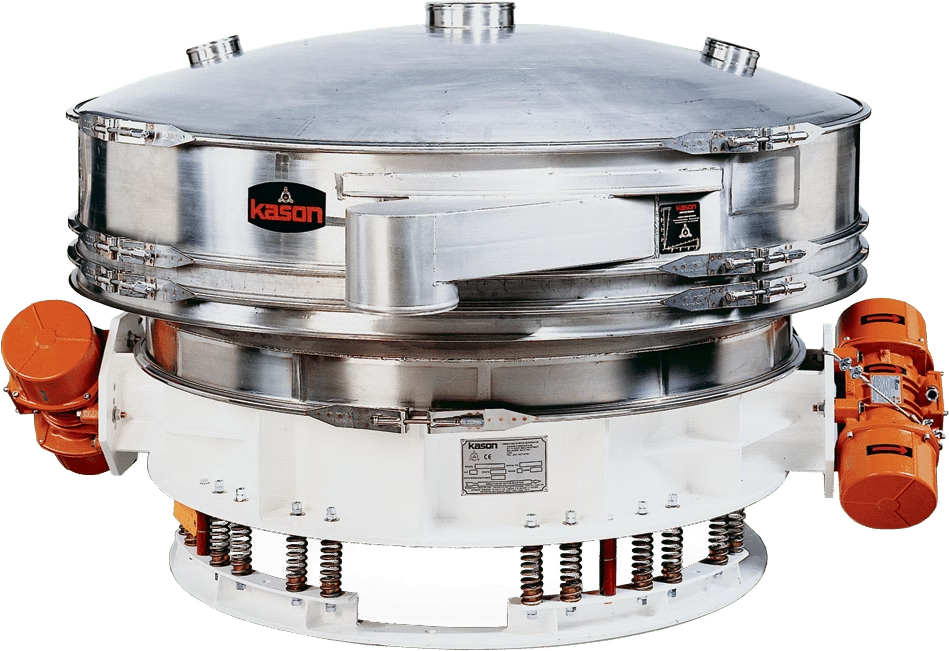
Dairy 3A Screeners 3-A sanitary vibratory screeners are the best option for removing impurities from milk, cream, cheese, and other dairy products because the vibration reduces pooling and allows more flow-through per square inch. Forced screening...

X-ray inspection for food is completely safe for detecting foreign objects and contaminants in food products. It uses low-dose X-rays to create images of the food, which are then analyzed by a computer to detect any abnormalities. This method is non-destructive and does not alter the food in any way.

Physical contamination, or “foreign material”, refers to the presence of any object or material in food that is not supposed to be there such as rock, glass, metal, plastic, or other contaminants. Physical contaminants can enter food products during the harvesting, manufacturing, packaging, or handling processes.

There are several types of mills that are used for size reduction of materials, including roller mills, hammer mills, pin mills, disc mills, and cone mills. Each type of mill has its own specific features and characteristics, and is more suitable for certain types of materials…
Originally created as a forum FAQ, this guide provides a high-level understanding of grain and malt handling and how to maximize yields. This guide covers strategy, policy, and important points and reminders.